21 October 2021

One More Additive to Watch Out For


Calcium propionate is a food additive present in many foods, especially baked goods. It acts as a preservative to help extend shelf life by interfering with the growth and reproduction of microorganisms. Although it has benefits for food manufacturers a 2019 study raises questions about how safe it is to eat.

The study, lead by Amir Tirosh, MD, at Sheba Medical Center in Tel-Aviv, suggests that propionate can alter metabolism in ways that increase the risk of diabetes, even when present only in small amounts. The additive triggered complex hormonal changes that raised blood sugar and insulin levels in both mice and humans. In the mice, consumption of propionate led to high blood sugar levels in the short term and weight gain and insulin resistance in the long term (after 20 weeks). In a small trial involving humans, people who consumed propionate experienced temporary increases in insulin resistance over the space of a few hours compared with those who didn't consume the additive.

While this early research does not prove that propionate causes diabetes, the findings are concerning given how widely propionate is used. In addition to bread and baked goods, propionate is commonly used in dairy products, especially cheese, and in meats, beer, sport drinks, commercially prepared salads such as potato salad, condiments such as vinegar and mustard, soups, sauces and dried or otherwise processed mushrooms, beans and nut butters.

Because it is so widely used and still considered safe by the FDA and DOA, it is very hard to avoid in any processed food.


20 October 2021

One in Five US Children Not Drinking Water


A 2019 study published in JAMA Pediatrics has found that one in five American children had not drank any water in the 24 hours before the survey. The aim of the study was to determine whether water intake had any effect on children’s consumption of sugary drinks. The study found that the children who did not drink water on a given day consumed nearly twice the calories from sugar-sweetened beverages as those with any water intake, far exceeding the recommended 10% of total calories from added sugar. The American Heart Association recommends that children shouldn’t drink more than one 8-ounce sugary drink per week.

The non-water drinkers consumed about 100 more calories each day from liquids than those who drank water. That 100 extra calories per day is enough to contribute to obesity and other health problems like diabetes and dental cavities if continued over time. Just 100 extra calories per day is enough to cause a weight gain of about 1 pound per month.

The earlier children were exposed to drinking water the more likely they were to do so throughout their childhood years.


18 October 2021

Should we Tax People for Their Own Good?

Five years ago, the World Health Organization suggested that taxing soda and sugary drinks would lower consumption and reduce obesity, type 2 diabetes and tooth decay. Now there is evidence that they may have been correct.

A recent study published in JAMA Pediatrics showed that one year after Philadelphia passed its beverage tax, sales of sugary and artificially sweetened beverages dropped by 38 percent in chain food retailers, according to Penn Medicine researchers who conducted one of the largest studies examining the impacts of a beverage tax.

On January 1, 2017, Philadelphia became the second city in the United States to implement a tax on the distribution of sugary and artificially sweetened beverages (Berkeley, California was the first). The goal of the 1.5 cent per ounce tax (18 cents on a typical 12 ounce can of soda) was to generate revenue to support universal pre-K, community schools, and improvements to parks and recreation centers, with the potential side benefit of curbing consumption of unhealthy drinks.

“Taxing sugar-sweetened beverages is one of the most effective policy strategies to reduce the purchase of these unhealthy drinks. It is a public health no-brainer and a policy win-win,” said study author Christina Roberto, an assistant professor of Medical Ethics & Health Policy in the Perelman School of Medicine at the University of Pennsylvania. “It’s likely to improve the long-term health of Philadelphians, while generating revenue for education programs in the city of Philadelphia.”

I am generally not a fan of taxing individuals to alter their behavior, but we have a long history of doing so - cigarettes, alcohol, etc. An argument can certainly be made that those who drink a lot of sugary beverages are being asked to shoulder a tax burden to support schools and public spaces that others are not. But one might also argue that their consumption exacts a pubic cost, since our insurance premiums end up paying for the negative health consequences these people bring on themselves. And I suppose from a freedom of choice point of view it is better than banning such products.

How do you feel about using taxes to "motivate" people to make choices that are better for their own health?


15 October 2021

Plastic - Its Not Just the Bottles Anymore

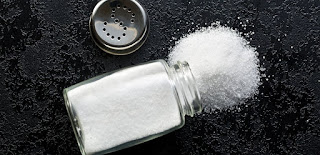
Microplastics, plastic particles less than five millimeters in length (or about the size of a sesame seed), were found in sea salt several years ago. But how extensively plastic bits are spread throughout the supply of the world's most commonly used seasoning remained unclear. Now, new research shows microplastics in 90 percent of the table salt brands sampled worldwide.

Of 39 brands sampled, 36 contained detectable levels of microplastic particles. The recently released study, co-designed by Professor Seung-Kyu Kim at Incheon National University in South Korea and Greenpeace East Asia and published in Environmental Science & Technology, analyzed salt samples from 21 countries throughout Africa, Asia, Europe, North America, and South America. The three brands that did not contain were from Taiwan, which uses refined sea salt; China, which uses refined rock salt; and France, which uses unrefined sea salt produced by solar evaporation. The report noted that the highest concentration of microplastics were found in commercial salt sold in Indonesia. The study also indicated that concentrations of microplastics were highest in sea salt, followed by lake salt, and then rock salt.

Estimating that an average adult consumes 10 grams of salt per day (The average American consumes 3 to 4 grams daily), the report concluded that people could be ingesting approximately 2,000 microplastics each year through commercial salt alone without knowing how harmful the effects could be. “The findings suggest that human ingestion of microplastics via marine products is strongly related to plastic emissions in a given region,” said Professor  Kim. “In order to limit our exposure to microplastics, preventative measures are required, such as controlling the environmental discharge of mismanaged plastics and more importantly, reducing plastic waste.”

"I want to say one word to you. Just one word. Plastics." - Walter Brooke to Dustin Hoffman in The Graduate


13 October 2021

Waste Less Food and Save Big


Let's say you do your grocery shopping and leave the store with 5 bags of food. When you get to your car, one of the bags slips and falls to the ground. Unconcerned, you get into the car and drive off, leaving the fallen food behind. 

Never, you say? Yet that is exactly what the average American family does every week.

Roughly 20% of the food we buy never gets eaten, according to the USDA. For a family of four, that comes to about $1,800 a year. In addition to the money you are throwing away, consider the resources wasted on producing that food, and the plastic packaging that ends up in landfills or, worse, dumped in the oceans. For example, producing a single pound of beef requires about the same amount of water as running your shower for 6 hours.

According to the National Resources Defense Council the reasons most commonly given for throwing away food include:

- Buying more than you need to "save money".
- Buying more than you need because smaller size packages were not available.
- An unplanned interruption left you without time to cook.
- You made too much when you did cook it.
- The food spoiled when you stored it.

Here are some tips for wasting less (and saving more).

1. Wasting less food begins before you even get to the grocery store. Live by the motto “Buy what you need, and eat what you buy.” Always have a meal plan and a list before going grocery shopping. Check your pantry and fridge before you head to the store to make sure you’re buying what you really need.

2. Shop more frequently and buy less each time. Yes, it can be a little less convenient than a weekly trip to the grocery, but your produce will be fresher and go farther than if stored in your refrigerator all week.

3. Cook more with frozen fruits and vegetables if you aren’t sure you’ll be able to use up fresh foods before they go bad. They are often more affordable than fresh and can be even more nutritious.

4. Keep you pantry well stocked with staples like rice, whole grains and pasta, beans, flour, and herbs and seasonings. A well-stocked pantry can be the secret to whipping up a tasty meal from food that would otherwise go to waste.

5. Be creative with leftovers. They can often be transformed into an entirely new meal. The internet is your friend here if you need ideas based on the ingredients you have. For example, check out all these recipes for leftover turkey. 

6. Store food properly. Don't just shove it into the refrigerator wherever you see some space. Use your crisper drawers to regulate humidity and temperature. Here is a guide to proper food storage.

7. Don't obsess over expiration dates. For the most part these are not mandated by regulation or law and are only the manufacturer's suggestion for when the food is at peak quality. Food is generally safe and tastes fine well after its expiration date. If it isn't moldy and smells fine, it probably is.

8. Its easy to forget what you have in your freezer and then discover it there months or even years later. Make sure to see what is already there each time you add more. Food that is "freezer burned" is normally perfectly safe to eat but it may taste "off" so use it in stews and soups that you can season well.

9. Lunch on leftovers. This could literally be eating leftovers straight out of the fridge, or making a new meal that uses leftovers as ingredients. Cook a little extra with this in mind.

10. If produce is going bad faster than you can eat it, preserve it by freezing, blanching and/or dehydrating. Your preservation method will be different for the different foods you’re working with, and you might even have to do a combination of them to maintain quality.

The United States discards more food than any other country in the world: nearly  80 billion pounds every year. That’s estimated to be 20-40 percent of the entire US food supply, and equates to about 219 pounds of food waste per person. Reducing food waste by just one-third would be enough to feed all of the 42 million Americans who face food insecurity. We waste $144 billion of food every year just in our homes alone.

Time for all of us to be aware and do our part.

12 October 2021

Glucosamine and Heart Health


People have taken glucosamine supplements for years to lesson join pain. It is known to be safe and is moderately effective for arthritis pain. It also a general anti-inflammatory effect. And, thanks to a 2019 study published in the British Medical Journal, we can add an important new benefit to it's resume. The study's findings suggest suggest that glucosamine may have benefits in preventing cardiovascular disease (CVD) events, such as coronary heart disease and stroke.

Researchers led by Professor Lu Qi at Tulane University in New Orleans drew on data from the UK Biobank - a large population based study of more than half a million British men and women. They found that glucosamine use was associated with a 15% lower risk of total CVD events, and a 9% to 22% lower risk of CHD, stroke and CVD death compared with no use.

Several mechanisms may explain these results, say the study's authors. For example, regular use of glucosamine has been linked to a reduction in levels of C-reactive protein (CRP), a chemical associated with inflammation. This may also help to explain the stronger association among smokers, who have higher levels of inflammation and higher risk of CVD than non-smokers.

Despite the large sample size, this is an observational study and, as such, can’t establish cause and effect. It is probably not worthwhile to start taking glucosamine if you are not already doing so but the use of glucosamine supplements to relieve osteoarthritis pain might also be related to lower risks of CVD events.


11 October 2021

Buyer BeAware


The global nutritional supplements market size was valued at over $310 billion in 2020 and is expected to expand by 6.2% annually from 2021 to 2028. Over 70% of Americans are regular users of dietary supplements. Some of these are useful, many of them are not. And many are not even what you think they are. If you use or plan to use supplements, here are some things you should keep in mind in order to be a savvy consumer.

If you buy or are shopping for supplements, know first that the US FDA does not verify in any way that a supplement actually contains what its label claims it does. Numerous store brand supplements aren't what their labels claim to be. An investigation led by New York Attorney General Eric Schneiderman determined that only 21 percent of the products on the shelves of retailers such as GNC, Target, Walmart and Walgreen actually contained what was advertised on the labels. Tests by Consumer Reports found that supplements are not uncommonly contaminated with lead and bacteria.

The best defense is to look for products that have been tested by a reputable third party - ConsumerLab, NSF International, Underwriters Laboratory (UL) and US Pharmacopeia are all reliable independent testers. Such a seal does not necessarily mean that a product is safe to use or that is does what it claims to do. But you at least have some assurance that what you are buying is what you are getting.

Remember that quality is not free. Shopping by price alone is generally not a good idea. That is not to say that the most expensive products are always the best but the cheapest products almost certainly are not. A little bit of on online research into the company producing a product is also a good idea.

Supplements can indeed be helpful in ensuring that you are getting the complete nutrition that you need. But they rarely "cure" anything and are "buyer beware" products. A good guideline is that if a product claim sounds too good to be true, it probably is.