28 October 2021

Pros and Cons of BMI


Body Mass Index (BMI) is a popular measure of a healthy body weight. It is simple to calculate using any online BMI Calculator and is a useful tool for monitoring your body weight. It isn't perfect, however, and you should understand its strengths and weaknesses.

BMI delineates where normal weight crosses the line to overweight or obesity. An ideal BMI is between 18.5 and 25 (mine is 24). Over 25 is considered to be  overweight and a BMI over 30 is classified as obese. People with a high BMI have been shown to be greater risk of a list of health issues, including metabolic syndrome and diabetes, arthritis, fatty liver disease, high cholesterol and some cancers. But as a single indicator its accuracy and validity can vary a lot.

At BMIs over 30 the risk measure is reasonably accurate but it becomes less reliable below that. That is because BMI only considers height and weight and it can not distinguish between fat and lean muscle weight. So for example, a weightlifter with an unusually high lean muscle mass might show a high BMI.

BMI does not consider the location of fat deposits either. Belly fat tends to be more closely associated with health risks than fat in other parts of the body.

Even ethnicity can affect the interpretation of BMI. Asians tend to have higher health risks at significantly lower BMIs and Caucasians have higher levels of body fat at a given BMI than African Americans.

So is BMI a useful indicator? Yes. Its is easy to calculate and gives you a quick assessment of your weight. Just don't rely on it to the exclusion of other measures and factors.

26 October 2021

When Are You Too Old to Start Exercising?


The short answer is: Never.

A longer answer would be: When your excuses overpower your motivation.

According to a recent study by the National Institutes of Health, formerly sedentary individuals who first began exercising between 40 and 61 years of age reduced their risk of death from all causes by 35%. The odds of cancer and heart disease also declined among those who began exercising vs those who did not.

The results of the 315,000 person study add to ample existing evidence that becoming active later in life can provide substantial health benefits. On the other hand people who were active during adolescence but not later in life gained little benefit compared to people who were never active. People who stopped exercising in their 20s and 30s but picked the habit up again later seemed to benefit just as much as people who maintained activity across their lifespan.

So there is the answer. It is never too late unless you are too lazy.


22 October 2021

Tips for avoiding "Seafood Fraud"


Although seafood is one of the most popular foods in the United States, consumers are routinely given little or no information about where their seafood is from. Worse, the information provided on seafood labels is often misleading or outright fraudulent. In fact, a study of seafood sourcing by Oceana.org found that as much as one third of all the seafood sold in the US is "mislabeled". The problem was so pervasive that the study authors called it "seafood fraud".

A separate study of sushi sold at 26 different Los Angeles area restaurants conducted by UCLA researchers found that nearly half the sushi being served was made with an entirely different variety of fish than what the menu said.

So a significant percentage of the seafood you buy may not only not have been raised or harvested as advertised but may not even be the type of fish you think you are buying. One example from the Oceana Study: Tilefish, a fish with very high levels of mercury, was being labeled and sold as Alaskan halibut.

Some suggestions for protecting yourself against ending up with something fishy?

Shop at large chains. Seafood is mislabeled much less often at large grocery chains than at small markets. Large stores must follow USDA regulations while smaller stores and restaurants are exempt.

Buy salmon. The Oceana study revealed far lower levels of mislabeling of salmon than of any other fish variety.

Beware of bargains. If the price is too good to be true, it probably is. If a price seems unreasonably low, it may be a sign it’s a mislabeled fish.

The problem varies from fish to fish. The three fish you need to be extra careful about buying due to frequent mislabeling are some of the most popular species: tuna, snapper, and grouper. Consumers should make sure to ask extra questions when buying these fish.

Buy the whole fish whenever possible. You can ask for it to be cut into fillets at the store. The more processed your fish and the more hands it passes through, the more opportunities for a bait and switch.

Don't let any of this put you off eating seafood. Just become a smarter, and more skeptical, shopper.

21 October 2021

One More Additive to Watch Out For


Calcium propionate is a food additive present in many foods, especially baked goods. It acts as a preservative to help extend shelf life by interfering with the growth and reproduction of microorganisms. Although it has benefits for food manufacturers a 2019 study raises questions about how safe it is to eat.

The study, lead by Amir Tirosh, MD, at Sheba Medical Center in Tel-Aviv, suggests that propionate can alter metabolism in ways that increase the risk of diabetes, even when present only in small amounts. The additive triggered complex hormonal changes that raised blood sugar and insulin levels in both mice and humans. In the mice, consumption of propionate led to high blood sugar levels in the short term and weight gain and insulin resistance in the long term (after 20 weeks). In a small trial involving humans, people who consumed propionate experienced temporary increases in insulin resistance over the space of a few hours compared with those who didn't consume the additive.

While this early research does not prove that propionate causes diabetes, the findings are concerning given how widely propionate is used. In addition to bread and baked goods, propionate is commonly used in dairy products, especially cheese, and in meats, beer, sport drinks, commercially prepared salads such as potato salad, condiments such as vinegar and mustard, soups, sauces and dried or otherwise processed mushrooms, beans and nut butters.

Because it is so widely used and still considered safe by the FDA and DOA, it is very hard to avoid in any processed food.


20 October 2021

One in Five US Children Not Drinking Water


A 2019 study published in JAMA Pediatrics has found that one in five American children had not drank any water in the 24 hours before the survey. The aim of the study was to determine whether water intake had any effect on children’s consumption of sugary drinks. The study found that the children who did not drink water on a given day consumed nearly twice the calories from sugar-sweetened beverages as those with any water intake, far exceeding the recommended 10% of total calories from added sugar. The American Heart Association recommends that children shouldn’t drink more than one 8-ounce sugary drink per week.

The non-water drinkers consumed about 100 more calories each day from liquids than those who drank water. That 100 extra calories per day is enough to contribute to obesity and other health problems like diabetes and dental cavities if continued over time. Just 100 extra calories per day is enough to cause a weight gain of about 1 pound per month.

The earlier children were exposed to drinking water the more likely they were to do so throughout their childhood years.


18 October 2021

Should we Tax People for Their Own Good?

Five years ago, the World Health Organization suggested that taxing soda and sugary drinks would lower consumption and reduce obesity, type 2 diabetes and tooth decay. Now there is evidence that they may have been correct.

A recent study published in JAMA Pediatrics showed that one year after Philadelphia passed its beverage tax, sales of sugary and artificially sweetened beverages dropped by 38 percent in chain food retailers, according to Penn Medicine researchers who conducted one of the largest studies examining the impacts of a beverage tax.

On January 1, 2017, Philadelphia became the second city in the United States to implement a tax on the distribution of sugary and artificially sweetened beverages (Berkeley, California was the first). The goal of the 1.5 cent per ounce tax (18 cents on a typical 12 ounce can of soda) was to generate revenue to support universal pre-K, community schools, and improvements to parks and recreation centers, with the potential side benefit of curbing consumption of unhealthy drinks.

“Taxing sugar-sweetened beverages is one of the most effective policy strategies to reduce the purchase of these unhealthy drinks. It is a public health no-brainer and a policy win-win,” said study author Christina Roberto, an assistant professor of Medical Ethics & Health Policy in the Perelman School of Medicine at the University of Pennsylvania. “It’s likely to improve the long-term health of Philadelphians, while generating revenue for education programs in the city of Philadelphia.”

I am generally not a fan of taxing individuals to alter their behavior, but we have a long history of doing so - cigarettes, alcohol, etc. An argument can certainly be made that those who drink a lot of sugary beverages are being asked to shoulder a tax burden to support schools and public spaces that others are not. But one might also argue that their consumption exacts a pubic cost, since our insurance premiums end up paying for the negative health consequences these people bring on themselves. And I suppose from a freedom of choice point of view it is better than banning such products.

How do you feel about using taxes to "motivate" people to make choices that are better for their own health?


15 October 2021

Plastic - Its Not Just the Bottles Anymore

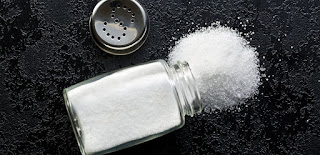
Microplastics, plastic particles less than five millimeters in length (or about the size of a sesame seed), were found in sea salt several years ago. But how extensively plastic bits are spread throughout the supply of the world's most commonly used seasoning remained unclear. Now, new research shows microplastics in 90 percent of the table salt brands sampled worldwide.

Of 39 brands sampled, 36 contained detectable levels of microplastic particles. The recently released study, co-designed by Professor Seung-Kyu Kim at Incheon National University in South Korea and Greenpeace East Asia and published in Environmental Science & Technology, analyzed salt samples from 21 countries throughout Africa, Asia, Europe, North America, and South America. The three brands that did not contain were from Taiwan, which uses refined sea salt; China, which uses refined rock salt; and France, which uses unrefined sea salt produced by solar evaporation. The report noted that the highest concentration of microplastics were found in commercial salt sold in Indonesia. The study also indicated that concentrations of microplastics were highest in sea salt, followed by lake salt, and then rock salt.

Estimating that an average adult consumes 10 grams of salt per day (The average American consumes 3 to 4 grams daily), the report concluded that people could be ingesting approximately 2,000 microplastics each year through commercial salt alone without knowing how harmful the effects could be. “The findings suggest that human ingestion of microplastics via marine products is strongly related to plastic emissions in a given region,” said Professor  Kim. “In order to limit our exposure to microplastics, preventative measures are required, such as controlling the environmental discharge of mismanaged plastics and more importantly, reducing plastic waste.”

"I want to say one word to you. Just one word. Plastics." - Walter Brooke to Dustin Hoffman in The Graduate