12 January 2022

Four Pillars of Strong Immune Systems


With the emergence of Covid the immune system has become a popular target for opportunists and outright scammers who would like you to think that they can sell you something to strengthen, support or otherwise supercharge yours immunity. What really works and what doesn't?

The immune system is a very complex network of cells, organs and tissues that help your body defend itself against infection and disease. Most of the recent tidal wave of immune support supplements are worthless as far as improving your immune response. But your immune system does become less effective as we age. So here are four things that a consensus of actual experts say can help your immune response stay strong.

1. Get vaccinated. (Those opposed to vaccination for whatever reason can skip ahead to #2, but now you have a stool instead of a chair). Some vaccines - measles or mumps - provide essentially lifetime protection. Others - chickenpox, influenza - require repeated exposures. Here are the ones the experts recommend for anyone 65 years of age or older: Annual flu, Pneumococcal pneumonia, COVID-19 and boosters, Shingles and TDAP (tetanus, diphtheria and pertussis).

2. Eat to Nourish Your Immune System. In regions where people follow what we know as the Mediterranean Diet, infections and deaths from Covid are lower than in regions where people do not, according to a March 2021 study published in Frontiers in Nutrition. To craft an immune system supporting diet choose a largely plant-based diet including lots of fruits and vegetables, whole grains, legumes, nuts and small amounts of lean protein, fish and healthy fats.

3. Exercise. Even a 30 minute daily walk will pay benefits. Exercise is shown to improve the effectiveness of T-cells, the attack submarines of your immune system. Get up, move.

4. Get your sleep. Even a single night of poor sleep suppresses the functioning of your T-cells by as much as 45%. Try to maintain a regular sleep schedule, good sleep hygiene and 7 to 8 hours of sleep per day.

Granted that none of this is as easy as buying and taking one of Real Doctor Wizmo's Super Germ Busting Immune Support Supplements every day. The difference is that these things work.


11 January 2022

Brain Food

When I was a child, I was not especially fond of seafood. This is a shame since, living as I did  on the south shore of Long Island, seafood was commonplace and plentiful. My mother would try to persuade me to eat it by claiming it was "brain food" and would make me smarter. I wasn't buying it.

It turns out that she may have been onto something.

Adherence to the MIND diet (Mediterranean-DASH Intervention for Neurodegenerative Delay, if you were curious) can improve the memory and thinking skills of older adults, even in the presence of Alzheimer's disease pathology, new data from the Rush Memory and Aging Project (MAP) shows. The MIND diet features leafy greens, whole grains, nuts, berries, beans and, yes, fish.

"The MIND diet was associated with better cognitive functions independently of brain pathologies related to Alzheimer's disease, suggesting that diet may contribute to cognitive resilience, which ultimately indicates that it is never too late for dementia prevention," lead author Klodian Dhana, MD, with the Rush Institute of Healthy Aging at Rush University in Chicago. Read that again..... it is never too late to make a difference.

The study focused on 569 older adults who died while participating in the MAP study, which began in 1997. Participants in the study were mostly white and were without known dementia. All of the participants agreed to undergo annual clinical evaluations and to undero brain autopsy after death. Researchers found that the cognitive benefits of the diet applied even to those who's brains already showed signs of Alzheimer's disease.

"Diet changes can impact cognitive functioning and risk of dementia, for better or worse. There are fairly simple diet and lifestyle changes a person could make that may help to slow cognitive decline with aging and contribute to brain health," Dhana said in a news release.

As for the fish, MIND recommends having it "at least" once a week. Thanks for the effort, mom.


10 January 2022

I Can Stop Any Time I Want

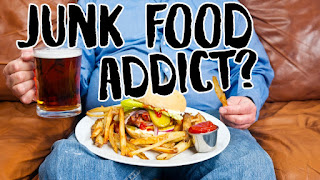
Drugs, alcohol and tobacco are all well understood to be substances to which we can develop physical and mental addictions. But what about fast food? One thing is certain and that is that fast food companies invest a lot of time, money and resources into creating products that keep you coming back for more.

“I consider junk food to be anything that doesn’t have any nutritional value,” says Shayna Komar, a licensed and registered dietitian at Thomas F. Chapman Family Cancer Wellness Center. “Processed foods are mainly salt, sugar, fat and preservatives — all of which create a combination of different sensations in your mouth. Your brain is involved as well. Foods that rapidly vanish or ‘melt in your mouth’ signal to your brain that you’re not eating as much as you actually are. In other words, these foods literally tell your brain that you’re not full and you need more of the food. It sounds good, but actually, you are not fueling your body, but burdening it to work very hard to metabolize junk food.”

Most fast food items are heavily flavored using synthetic ingredients that are scientifically designed to get you "hooked". In his disturbing book, The Hacking of the American Mind, Dr. Robert Lustig explains how the design of fast foods intentionally stimulate the same regions of the brain as alcohol or cocaine by acting on the neurotransmitter dopamine. Fast food is a factor in more annual deaths in the United States than smoking.

Junk food addiction is a comprehensive term and pretty much encompasses anything which adds calories, fat, and sugar with few nutrients to back it up. Soda, salty snacks, many traditionally prepared baked goods, fast food, packaged food the list goes on and on. Fast food outlets typically offer little else. Even if you head for the salad bar you will find plenty of unhealthy choices, high calorie dressings and pastas.

Though the term “addiction” is often thrown around lightly, having a true addiction is a serious problem. The symptoms and thought processes related to food addiction are similar to those of drug abuse. It’s just a different substance and the social consequences may be less severe. Food addiction causes physical harm and leads to serious diseases like obesity and type-2 diabetes. It may negatively impact your self-esteem and self-image, making you unhappy with your body. Food addiction may also take an emotional toll and increase your risk of premature death.

What to do? The best, smartest choice would be to never set foot in a fast food restaurant again - at least not until they get the message, which will be a very long time.  

But junk foods are everywhere and a major part of modern culture. They are cheap, convenient, fast and deviously satisfying. Avoiding them is not easy but does become easier with time. The less junk food you eat, the less you will crave. and your cravings may disappear entirely in time, often is a little as 6 months. So take heart.

As with other addictive substances, you can break free of your cravings. Follow these tips from experts at the University of California to break your junk food habit:

1. Plan your meals: If you already have a healthy meal prepared, that will help you avoid unhealthy choices. “Not all foods are created equally,” said Ashley Gearhardt, assistant professor of clinical psychology at the University of Michigan, who co-developed the Yale Food Addiction Scale to help identify people at high risk for food addiction. “You don’t see people binging on apples.”

2. Learn your "triggers".  Awareness is an important first step. Pay attention to those moments when your cravings start so you can figure out what unleashes them. Stay away from situations and places that usually end up with a trip to the Coronary Burger Barn.

3. Replace addictive foods with foods you like but don’t struggle with: “We need food to survive,” Gearhardt said. “You should enjoy eating. You’re not going to stick to a diet of gruel and broccoli.” Remember it need not be all or nothing. Even cutting back will make a difference and make further progress easier.

4. Remember that nobody is perfect. Don’t judge yourself too harshly for occasional junk food lapses. If you take an all-or-nothing approach, you can feel even more hopeless after giving in to your cravings. Food cues are strong and can be difficult to avoid, and it takes time to learn your triggers and get better at making healthy choices. 

Or, just ignore it all and enjoy your diabetic heart attack. After all, what's good for Fast Food is good for America!


06 January 2022

Resolutions vs Goals


New Year's resolutions are so famously fleeting that there is now an official day to abandon them. That's right. Those annoying commitments you made to yourself in the last hours of 2021 can now be guiltlessly forgotten. Monday, January 17th is Ditch New Year’s Resolutions Day. (Google it. Its a thing.)

By most estimates (if this doesn't prove that there is a study of everything I don't know what does) your odds of keeping those resolutions are pretty slim. Of those who make a New Year’s resolution, 25% have given up on it after one week. After one month, 36% have called it quits. Fifty-four percent of us are done with our resolutions after 6 months and by the end of the year 91% of resolution makers have forgotten all about them as they make their new ones. In fact, one study shows that of those who make a resolution, only about half of them even expect to be successful in keeping it when they are making it!

What is going on here? Why do so many people fail to do things that they want to do? And given these failure rates, why do we do it over and over again?

The temptation is to conclude that, faced with the reality of the effort required to succeed, most of us are just too lazy to carry on. In fact, it is a little more complicated than that.

Tony Robbins says that the real secret to happiness is not success but progress. People have a need to feel that their lives are progressing. The calendar makes it seem like we can have a new start. It is a natural time to look back and see how far we have (or have not) come and where we want to go next. The problem with that is that it is not a new start at all. It is just an arbitrary date and you are exactly the same person on January 1st that you were on December 31st.

Does this mean we should just give up and accept ourselves as we are? Of course not! We just need to be a little more realistic about how we plan to move forward. Most resolutions amount to nothing more than a wish list, things that we would like to have happen for us. Like winning the lottery, the chances of those things just happening are not great. 

Resolutions also tend to be Big Picture statements. I will go to they gym 4 days a week. I will lose 50 pounds. I will start that part-time business. I will quit smoking. I will reconnect with my family and friends. All laudable wishes. But that is all they are, wishes. Especially when we make all of them at once.

Instead of resolutions, what we need are goals and a plan. To create real change we have to create real change, not just hope that things magically change for us. Success comes from many small steps, not one giant one. 

What are the areas of your life that you want to improve/change/make progress in? Write them down. All of them. 

Then select the 1 to 3 areas that matter most to you, where you feel most motivated to actually do something about them.

Think about where you are now in just those areas. This calls for brutal honesty, but you need not share your thoughts with anyone. How did you get there? Why is that how things are? What things, if you changed them, would move you toward where you want to go?

Now break those changes down into smaller pieces. Be realistic about what you can do. One big reason people fail to achieve their resolutions is that they just set unrealistic expectations and timeframes, things they do not really believe they can do. If you want to lose 50#, you can't do it until you have lost 5 pounds. Anyone can lose 5 pounds in a month or two. Start there. Build momentum toward success by creating small successes, one after another. Then don't stop.

Make a plan for your small steps. What will you do and by when will you do it? What help or support or resources would you need, from who? How will you track your progress? How will you reward yourself?

This way, when you get to February, instead of broken resolutions and disappointment you will have just a few small successes to celebrate. You are on your way! Just keep going.


05 January 2022

No, Avocados Don't "Scorch" Belly Fat


Avocados are good food. One-half of an avocado provides 160 calories, 2g of protein, 8.5g of carbohydrates, and 15g of fat. Avocados are an excellent source of magnesium, potassium, vitamin C, vitamin E, and vitamin K. While most of the calories in an avocado come from fat, they are mostly in the form of healthier monounsaturated fat. Monounsaturated fatty acids or come from plant sources and may be helpful in lowering your LDL or "bad" cholesterol. For this reason, the Academy of Nutrition and Dietetics recommends that you choose foods with monounsaturated fats instead of saturated fat.

But will avocados "scorch belly fat", as a 12-week study funded by the Haas Avocado Board and reported on the "Eat This, Not That" website claimed?

The two main types of fat stores in our bodies are subcutaneous fat and visceral fat. Subcutaneous fat is the body fat which is found directly under your skin and is normally pinchable and can be measured with fat/skin fold callipers. Visceral fat (also known as abdominal or belly fat) is found within the abdominal cavity, between the stomach, intestines, liver, kidneys etc., making it much trickier to measure.

The 12-week study on which the "scorching" claim based included 105 adults who were either overweight or obese. One group was provided a daily meal that included an avocado and the other group an equivalent meal that did not. The results? There was no difference in visceral fat between the study and control groups. Ooops! Not what the Avocado Board wanted to hear!

No worries though. Just dice and slice the data in different ways until you find something that you are looking for. In this case, that the women participants who were consuming a daily avocado showed a slight reduction in visceral fat. It was not statistically significant but that did not prevent a press release from claiming that "Women who consumed avocado as part of their daily meal had a reduction in deeper visceral abdominal fat." Nor did it stop the media from publishing breathless headlines about "scorching belly fat".

This is a classic example of a study that starts out with the results it wants, mines the data till it finds it - however meaningless the result may be - and than feeds it to an uncritical and headline hungry media. Always at least glance at the underlying study behind some new amazing claim. Who funded it? How was it conducted? For some unbiased advice on how to interpret nutrition studies, here is a quick read.

Go ahead and eat avocados, they really are good for you. Just don't expect them to "scorch" any belly fat. No matter what the Avocado Board tells you.

04 January 2022

Long-term Tea Drinkers May Have an Edge on Avoiding Dementia


A 2019 study led by researchers from the National University of Singapore (NUS) concluded that long-term regular tea drinkers have better organized brain regions -- and that this is associated with healthier cognitive function -- compared to non-tea drinkers. The research was carried out together with collaborators from the University of Essex and University of Cambridge, and the findings were published in scientific journal Aging.

"Our results offer the first evidence of positive contribution of tea drinking to brain structure, and suggest that drinking tea regularly has a protective effect against age-related decline in brain organization," explained team leader Assistant Professor Feng Lei, who is from the Department of Psychological Medicine at the NUS Yong Loo Lin School of Medicine.

The research team recruited 36 adults aged 60 and above, and gathered data about their health, lifestyle, and psychological well-being. The elderly participants also had to undergo neuropsychological tests and magnetic resonance imaging (MRI) scans of their brains. The research team found that individuals who consumed tea at least four times a week for about 25 years had brain regions that were interconnected in a more efficient way. The type of tea did not seem to matter and green tea, oolong tea, and black tea were equally effective.

"We have shown in our previous studies that tea drinkers had better cognitive function as compared to non-tea drinkers," added Lei. "Our current results relating to brain network indirectly support our previous findings by showing that the positive effects of regular tea drinking are the result of improved brain organization brought about by preventing disruption to interregional connections."

While this is great news for those of us who have been regular tea drinkers for 25 years, it is not clear what it means for the rest of us. Further research is needed to determine how short a time might produce similar results. In the meantime, what could it hurt to start?


03 January 2022

Can Bacon Be Part of a Healthy Diet?


There is really no question about whether or not processed meats are healthy food. They aren't. The World Health Organization warns that a person who eats just 2 slices of bacon each day increases their risk of colorectal cancer by almost 20%. But what about eating bacon, sausages, hot dogs or lunch-meat just occasionally. Is that safe? And how often is "occasionally" anyway?

All of these meats are high in saturated fats, sodium and nitrate preservatives (not to mention calories), so they should absolutely not be a staple part of anyone's diet. Besides raising your cancer risk they also put you at higher risk for heart disease. Still, having a weekly serving (2 slices of bacon, one sausage or hot dog, or 3 ounces of ham is most likely not a problem for most people, according to Lauri Wright, chair of the department of nutrition and dietetics at the University of North Florida. 

So go ahead and have some bacon with your Sunday morning meal. Just don't forget that it is loaded with things that are doing you no good. Enjoy it. But avoid it the for rest of the week.